русский
 日本語
日本語 한국어
한국어 Latine
 Tiếng Việt
 বাংলা
বাংলা ไทย
ไทย عربى
عربى Hrvatski
 dansk
dansk čeština
 Nederlands
 Pilipino
 Suomalainen
 Magyar
 Indonesia
 italiano
 Gaeilge
 Bahasa Melayu
 norsk
norsk فارسی
فارسی Português
 Polskie
 Română
 Slovák
 svenska
 Türk
TürkTrzy cytaty dotyczące fasady hotelu o powierzchni 600 metrów kwadratowych lądują na tym samym biurku: suszony w piecu czerwony cedr zachodni, modrzew sybe...
READ MORE
2026-09-11
Most cladding problems trace back to decisions made before a single panel reaches the wall: a substructure without a ventilation gap, a surface that fades unevenly under strong sun, or accessories that do not match the panel profile. Get those decisions right and exterior wall cladding panels protect the building and keep their appearance for decades with nothing more than an annual wash. This guide compares the main cladding materials, explains how WPC panels differ across classic, 3D embossed, and co-extrusion surfaces, and lists the specifications and installation details that separate a smooth project from a costly one.
A cladding panel has three jobs. It shields the structural wall from direct rain and UV exposure. Together with its battens or joists it forms a rain-screen, where water that passes the joints drains down the back of the panel and a ventilated air gap of roughly 20 to 40 mm lets the cavity dry. It also defines the face of the building, which is why surface texture and color stability matter as much as raw strength.
Because panel and substructure work as one system, they should be designed together. An open-joint layout shows crisp shadow lines but demands a more UV-stable panel backing, while a grooved profile that hides fixings needs precise gap control to stay straight through summer heat. If you are still mapping the category, the overview of what composite siding cladding is covers the basic structure and terminology before you compare quotes.
Five materials dominate the market. WPC composite panels combine wood fiber with polyolefin plastic, giving a warm timber-like surface without the re-sealing cycle of real wood. Fiber cement is heavy and highly weather resistant, common on commercial facades. Aluminum delivers the cleanest lines and the best fire performance at the top of the budget. Vinyl is the lightest and cheapest option, mostly limited to simple residential work. Natural timber looks premium and starts cheaper than aluminum, but it needs cleaning, sanding, and recoating every few years.
The chart above shows indicative installed costs per square meter for the five most common cladding materials, drawn from typical project price bands rather than any single market. Vinyl stays cheapest but is rarely chosen for facades that need a premium finish. WPC sits in the lower-middle band, because the panel costs more than vinyl while its light weight and simple screw fixing to joists keep labor hours down. Fiber cement, timber, and aluminum climb higher as painting cycles, sealing work, or heavier framing enter the calculation. Treat every bar as a planning figure, then confirm real numbers with quotes for your profile, volume, and shipping distance.
| Material | Typical service life | Maintenance load | Weight | Best fit |
|---|---|---|---|---|
| WPC cladding | 20 to 30 years | Low, annual washing | Light to medium | Residential facades, garden walls, resorts |
| Fiber cement | 25 to 40 years | Medium, repaint cycles | Heavy | Commercial and coastal buildings |
| Aluminum panel | 25 to 40 years | Low | Light | High-end commercial facades |
| Vinyl siding | 15 to 25 years | Low | Very light | Budget residential projects |
| Natural timber | 10 to 25 years | High, re-sealing cycles | Medium | Premium natural-look designs |
Within WPC, the surface system is the biggest single difference between products that still look new after five years and products that gray out early. Three systems cover most of the market.
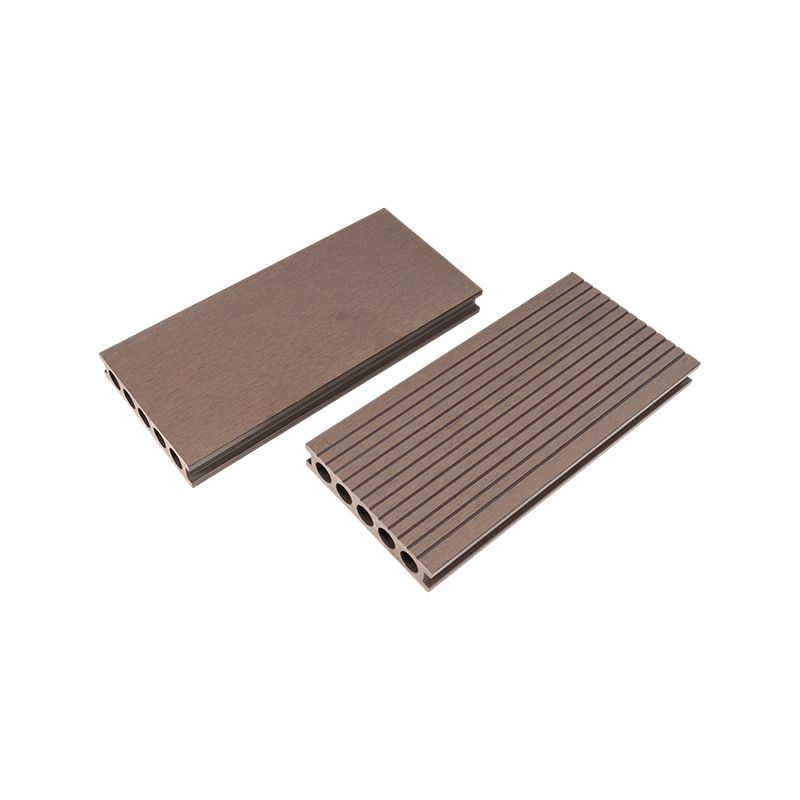
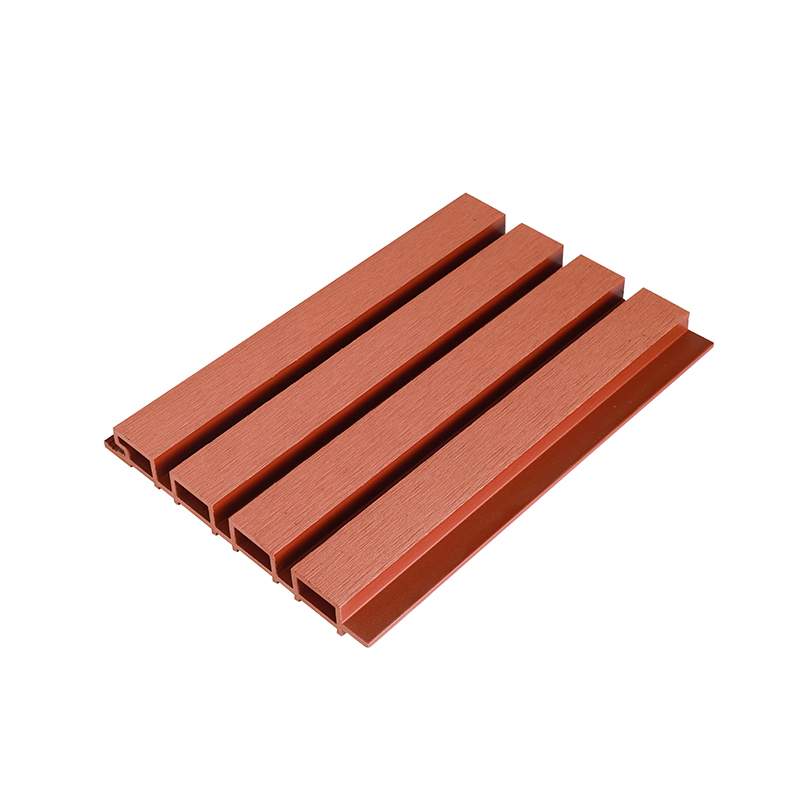
Classic WPC wall panels use a brushed or grooved surface on a wood-plastic core. They are the most economical option and suit garden walls, boundary screens, and facades viewed from a distance, with the widest color choice at the lowest price.
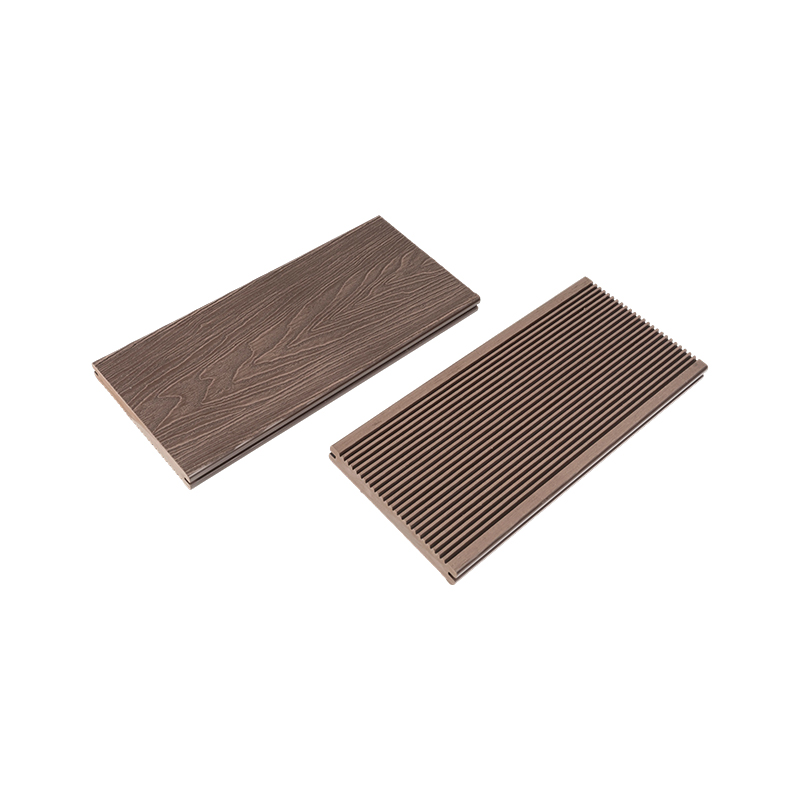
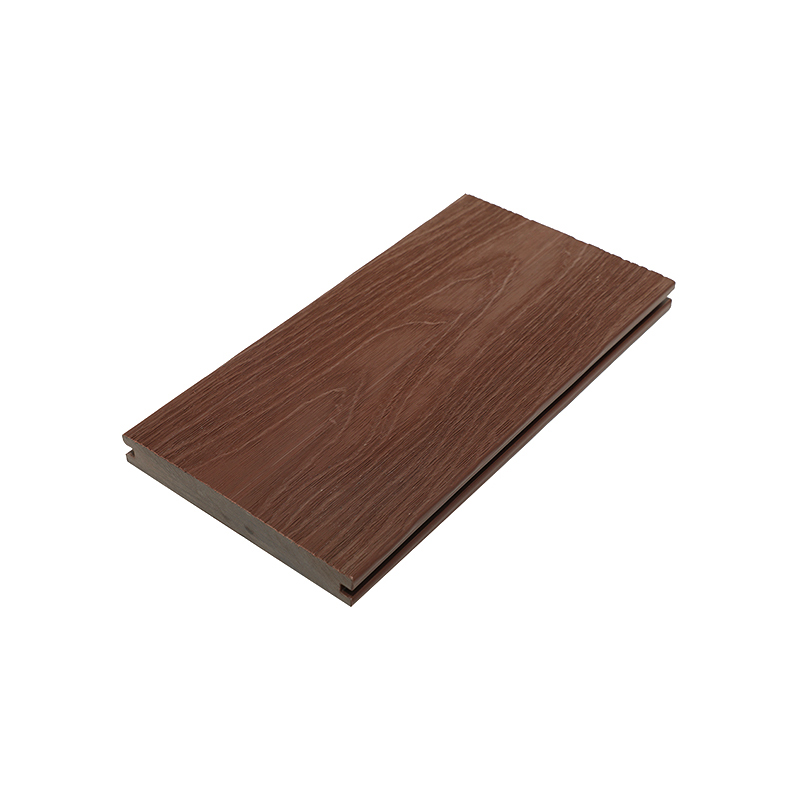
3D embossed panels carry a pressed wood grain with real depth, so the surface reads as timber even at close range. The texture also breaks up flat sun reflection, which helps color consistency across a large wall. For villas, resort buildings, and feature walls that need a natural look without natural wood upkeep, this is the usual choice.
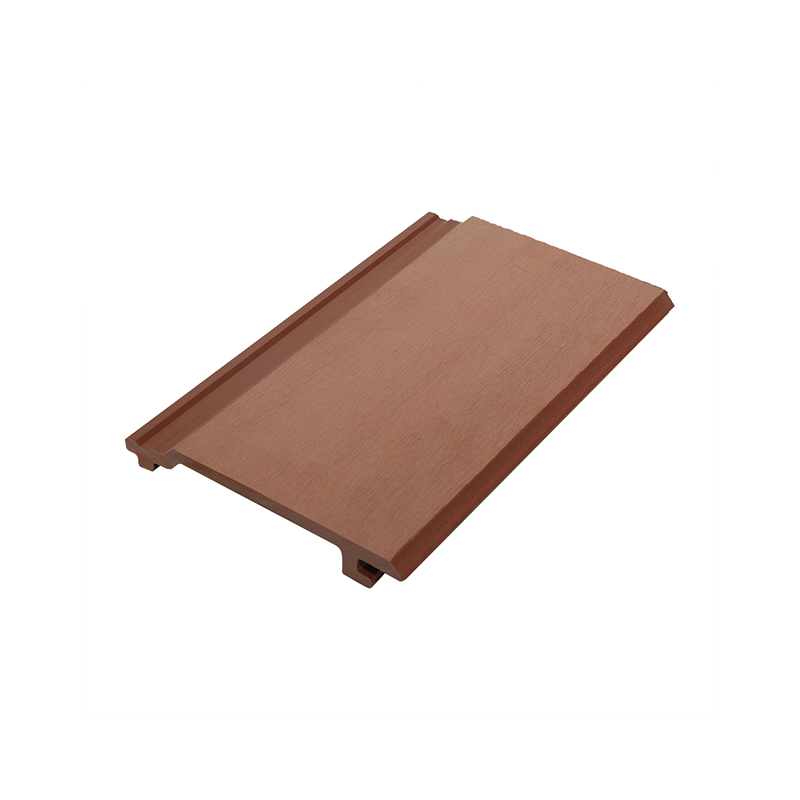 3D Embossed WPC Outdoor Wall Cladding Panel A wood-plastic composite cladding with pressed 3D wood-grain texture, UV and moisture resistant. It delivers a natural timber look for villas and feature walls without the upkeep of real wood. View Product →
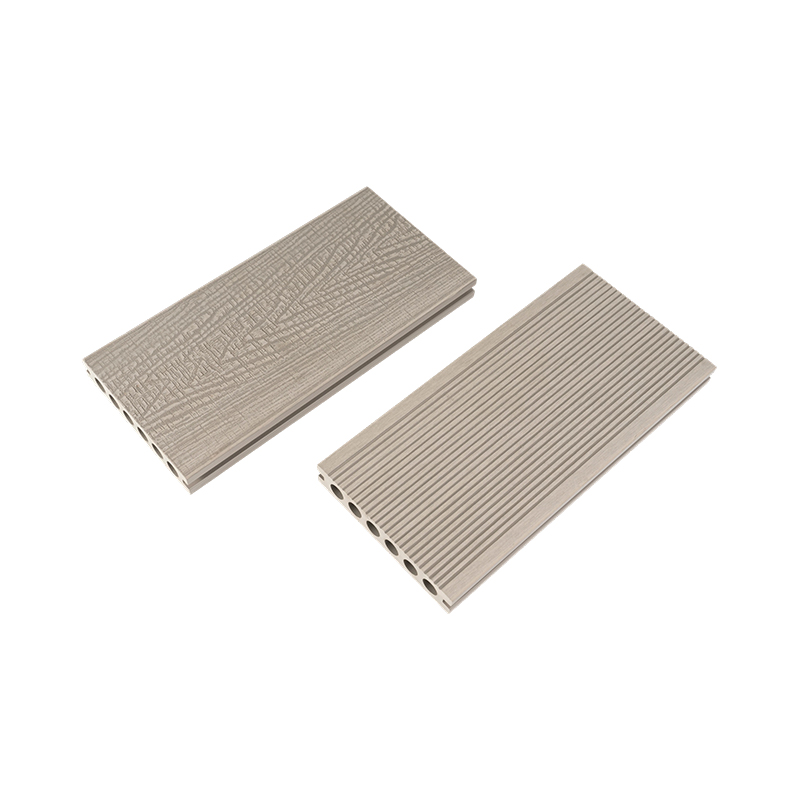
 Co-extrusion bonds a polymer shell over the core during extrusion, and that shell is where performance jumps. The sealed layer resists staining, slows color change under UV, and cuts water absorption to a fraction of a standard core. Dual-color co-extrusion even shows different tones on face and groove, adding contrast without paint.
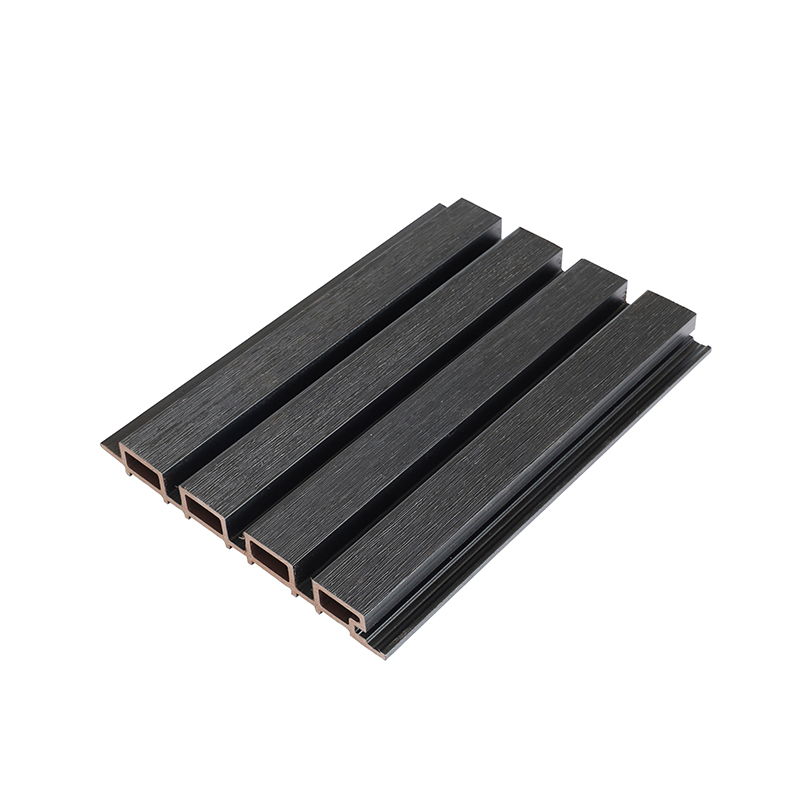 Co-extrusion WPC Siding Panel 219mm x 26mm This co-extruded wall panel bonds a polymer shell over the WPC core, cutting water absorption and resisting stains and fading, making it a low-maintenance choice for exterior walls in wet seasons. View Product →
 Water absorption is measured by weighing a sample before and after 24 hours of immersion, and the result drives nearly every moisture-related failure on a wall. Finished timber absorbs the most, which is why it swells and needs re-sealing on a fixed schedule. A standard WPC core absorbs far less because the plastic fraction encapsulates the wood fibers. Co-extrusion lowers the figure further, since the bonded polymer shell keeps surface water on top of the panel instead of letting it migrate inward. Lower absorption also improves stain behavior and keeps the board dimensionally stable through wet seasons.
Two buyers can order the same words, WPC cladding, and receive very different products, so pin the following points down in writing.
| Specification | Why it matters | What to confirm |
|---|---|---|
| Profile size and wall thickness | Controls stiffness, coverage per board, and fixing strength | Actual dimensions and the thickness of structural walls |
| Density | Drives impact resistance and screw holding | The measured value for the core, not an estimate |
| UV and color stability | Decides whether the facade fades unevenly | Weathering test data for the exact surface system |
| Expansion gap allowance | Prevents buckling on hot days | The supplier gap chart for board length and local temperature |
| Fire classification | Required by many commercial codes | A rating matched to your local building code |
| Accessory matching | Mismatched clips and trims cause most site delays | Joists, screws, and trims from the same panel system |
Color belongs on this list as well. A capable manufacturer adjusts the formula to match a required tone and can design different profile sections through CAD, which matters when a project needs a non-standard board width or a shadow groove the standard mold cannot produce.
Panels rarely fail on their own; the surrounding system lets them down. Four details carry most of the risk.
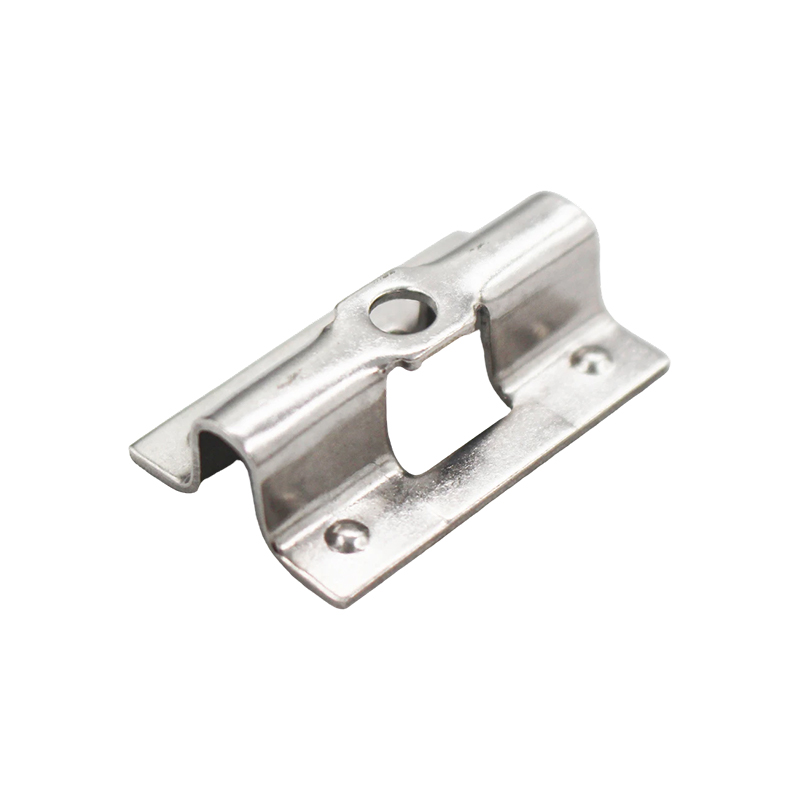
Ordering the supporting system from the same factory removes most of the guesswork. A matched WPC joist is sized to the board fixing groove and behaves thermally like the panel itself, which is exactly what a wall cavity needs.
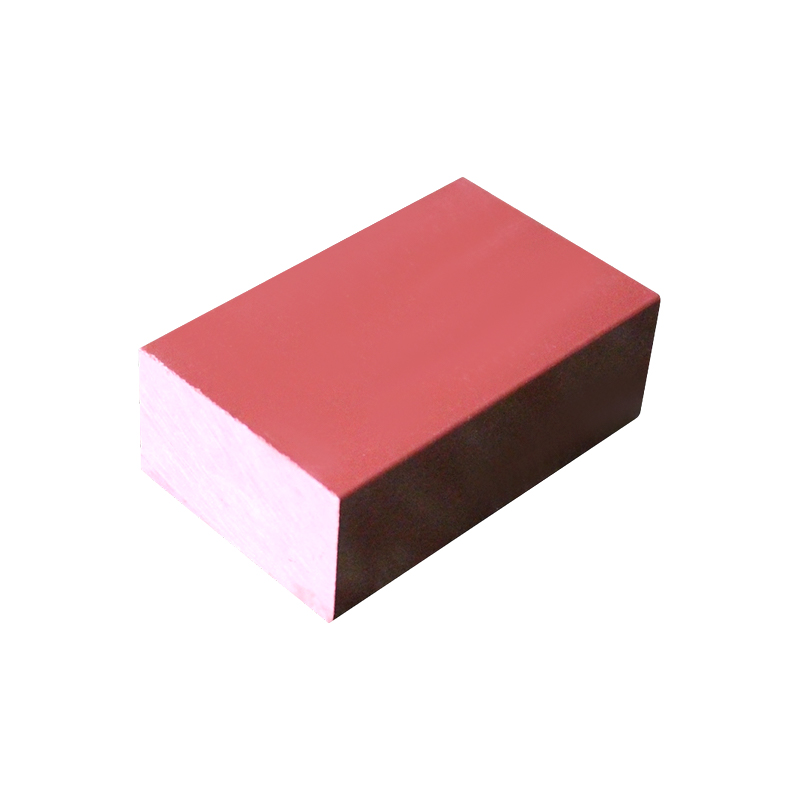 WPC Joist Keel for Wall Panel and Flooring Support A matched WPC keel sized to the panel fixing groove, with similar thermal behavior for stable wall cavities. Corrosion and moisture resistant, it supports flat installation without painting or sealing. View Product →
 The honest maintenance summary for WPC cladding is short: wash it once a year with mild detergent and water, rinse well, and check that screws and expansion gaps stay clear. There is no painting or sealing cycle, and the financial effect of that difference is easiest to see plotted over time.
The lines above project cumulative maintenance spending over twenty years for the same facade, indexed so both systems start at the same first-year cost. The timber line climbs in steps because each cleaning, sanding, and recoating cycle repeats every two to four years. The WPC line rises only slightly, reflecting an annual wash and an occasional check of screws and gaps. Within roughly five to seven years, the cumulative difference typically covers the initial price premium of WPC over finished timber. Past year ten, the gap usually widens enough to fund a full set of replacement accessories, and the exact crossover moves with local labor rates.
Project type narrows the choice quickly. For a residential facade or hotel exterior viewed at close range, 3D embossed or co-extrusion panels give the best balance of texture and color stability. For garden structures, boundary walls, and park buildings, classic panels deliver the needed performance at the lowest cost. Where codes demand maximum fire performance or razor-sharp commercial lines, aluminum or fiber cement may still be the right call despite the premium.
The radar chart rates the three leading materials across five practical criteria on a simple 0 to 10 scale based on typical project feedback. WPC stretches furthest on upkeep convenience and cost efficiency, which is why it dominates residential facades, garden walls, and resort projects with limited maintenance budgets. Fiber cement holds a slight edge in weather resistance and impact strength, a strong position where hail or mechanical damage is a concern. Aluminum leads on weather resistance and delivers the cleanest shadow lines, but cost efficiency and dent behavior hold it back on price-sensitive work. Read the chart as a weighting tool: choose the two axes your project cares about most, then check which polygon reaches furthest on them.
Supplier capability shows in five answers. Can the factory show current weathering and water absorption data for the exact surface system being quoted? Is color customization available at your order volume? Can profiles be adjusted in CAD when the project needs a non-standard section? Does the same supplier provide joists, screws, clips, and edge trims so the wall arrives complete? And what annual production capacity stands behind the delivery date?
Manufacturers such as Jiangsu Senyu New Material, maker of the Senyu Wood brand, build their offer around those answers: twelve years focused on wood-plastic composite production, a stated annual capacity of 20,000 tonnes, and CAD-based custom profiles spanning wall panels, decking, fencing, and matching accessories. For trade buyers, that combination of capacity and a complete accessory system is what turns a good panel price into a predictable project. If you are comparing factories for an upcoming facade, send your drawings and quantities through the contact page to request samples, custom color options, and a quotation based on your actual profile.
Exterior wall cladding panels reward buyers who look past the sample board. Check the surface system, confirm the numbers behind the claims, and pair the panel with a ventilated substructure and proper trims. Do that, and the facade you install this season will still look clean and deliberate long after cheaper walls have been repainted twice.
Trzy cytaty dotyczące fasady hotelu o powierzchni 600 metrów kwadratowych lądują na tym samym biurku: suszony w piecu czerwony cedr zachodni, modrzew sybe...
READ MOREZapytaj każdego, kto ponownie położył zepsuty taras, a powróci ta sama historia: rzędy śrub, które zardzewiały i pozostawiły smugi na jasnych deskach, złą...
READ MOREMost cladding problems trace back to decisions made before a single panel reaches the wall: a substructure without a ventilation gap, a surface that fades...
READ MOREZapytaj instalatora, co tak naprawdę psuje taras kompozytowy, a odpowiedzią rzadko jest deska. Są to smugi rdzy krwawiące na jasnej powierzchni, łby śrub ...
READ MOREWPC wall cladding typically lasts between 20 and 30 years when properly installed and maintained, significantly outperforming solid woo...
READ MORE